【Trademark】 Case Holding that Trademark Infringement May Be Found Even Where Certain Visual Differences Exist, if Commonality Is Recognized in Light of Common Sense: the “Yorokobi” Case
Osaka District Court May 28, 2026 Case No. 2024 (Wa) 12150 Action for Revocation of Trial Decision
Summary
The Plaintiff owned trademark rights for the trademark “よろこび” (Yorokobi; “Joy”) and others in relation to Japanese sake. The Plaintiff alleged that the Defendants (the defendant company and the defendant brewery) infringed the Plaintiff’s trademark rights by manufacturing and selling Japanese sake under the name “喜び” (Yorokobi; “Joy”).
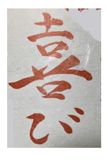
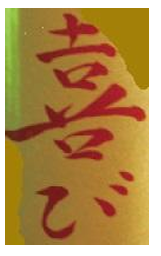
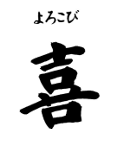
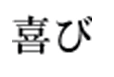
The court held that the hiragana expression “よろこび,” the expression “喜(よろこび)” consisting of a kanji character with furigana, and the expression “喜び” consisting of a kanji character followed by an okurigana character, although having certain differences in appearance, shared the same pronunciation and concept, and that when used for Japanese sake there was a likelihood of confusion as to source. Accordingly, the court found them to be similar.
The Defendants asserted a prior use right with respect to “喜び” and argued that the Plaintiff’s claims constituted an abuse of rights; however, all such arguments were rejected. The court granted an injunction against the Defendants’ use of “喜び,” ordered deletion thereof, and awarded damages under Article 38(3) of the Trademark Act.
Case Overview
Subject Mark/Plaintiff’s Mark
Cited Mark/Defendant’s Mark
Trademark 1 (Registration No. 889339)
Defendants’ Mark 1

Trademark 2 (Registration No. 4938994)
Defendants’ Mark 2

Trademark 3 (Registration No. 5095211)
Defendants’ Mark 3
The Plaintiff manufactured the Plaintiff’s products through Hatsumitsu Shuzō (初光酒造; Hatsumitsu Brewery; hereinafter, the “Subject Brewery”), of which the Plaintiff served as representative, and sold them on a website. Labels affixed to bottles of such Japanese sake bore the Subject Trademarks.
The defendant company operated a chain of sushi restaurants (hereinafter, the “Subject Sushi Restaurants”), and the defendant brewery manufactured the Defendants’ products at the request of the defendant company as exclusive products to be sold by the defendant company and delivered those products to it. Bottles of the Defendants’ products delivered to the defendant company bore product labels including Defendants’ Mark 1 or Defendants’ Mark 2, and the defendant company served the Defendants’ products at the Subject Sushi Restaurants using Defendants’ Mark 3 on its menus.
Court’s Decision
(1) Similarity Between the Subject Trademarks and the Defendants’ Marks
A. Trademark 1
Trademark 1 was expressed solely in hiragana, whereas Defendants’ Marks 1 and 2 consisted of a kanji character and hiragana. Although there were certain visual differences between them, the court held that, from the perspective of traders and consumers, it belongs to common knowledge that the kanji representation of “よろこび” is “喜び,” and therefore, commonality in appearance is recognized. Their pronunciation and concept were also identical. In addition, the expression “よろこび” or “喜び” could not be regarded as commonplace as a product name for Japanese sake.
Accordingly, the court held that Trademark 1 and Defendants’ Marks 1 and 2, when used for Japanese sake, were likely to cause confusion as to source and were therefore similar. The court further held that the same reasoning applied to Defendants’ Mark 3 and found it similar.
B. Trademark 2
Trademark 2 was written entirely in hiragana. Although there were certain visual differences when compared with the Defendants’ Marks, which consisted of a kanji character and hiragana, the court held, as in its reasoning regarding Trademark 1, that commonality in appearance existed in light of common sense, and that the pronunciation and concept were common. Accordingly, the court found that Trademark 2 and the Defendants’ Marks were likely to cause confusion when used for Japanese sake and were therefore similar.
C. Trademark 3
Trademark 3 consisted of the single kanji character “喜,” without okurigana, together with the hiragana expression “よろこび.” Compared with the Defendants’ Marks, which consisted of the kanji-and-hiragana expression “喜び,” there were certain visual differences. However, those differences were merely minor differences consisting of the presence or absence of the okurigana character “び,” the presence or absence of furigana, and differences in typeface. As in its reasoning regarding Trademark 1, the court held that the pronunciation and concept were common and that Trademark 3 and the Defendants’ Marks were likely to cause confusion when used for Japanese sake and therefore found them similar.
D. Rejection of the Defendants’ Arguments
The Defendants argued that there was substantial geographical separation between the Subject Brewery and the defendant brewery. They also contended that Japanese sake cannot be distinguished as to source by brand name alone and that source identification is made based on label design and similar factors under the actual circumstances of trade.
However, the court held that there was insufficient evidence to recognize circumstances showing that Japanese sake cannot be distinguished as to source by brand name alone. The court further held that the geographical separation between the parties would not eliminate the likelihood of confusion and that, in this case, there was sufficient likelihood that traders and consumers would mistakenly believe that the source of the Defendants’ products was the Subject Brewery. The court also stated that the advertising and promotional activities conducted by the Subject Sushi Restaurants rather strengthened the likelihood of confusion.
(2) Existence of the Defendants’ Prior Use Right
The defendant company argued that it had already been using the Defendants’ Marks at the time of the filing of Trademark 2 (filed in July 2005) and Trademark 3 (filed in March 2007), and that, considering factors such as the operation of a large number of Subject Sushi Restaurant locations, the Defendants’ Marks had become “widely recognized among consumers as indicating goods or services pertaining to its business,” thereby establishing a prior use right under Article 32(1) of the Trademark Act.
The court held that, as of the filing date of Trademark 3, the Subject Sushi Restaurants numbered only about twenty locations, primarily in Tokyo, and sales of the Defendants’ products amounted to only approximately JPY 1.5 million per month. Accordingly, the court found that the Defendants’ Marks could not be deemed to have been “widely recognized among consumers as indicating goods or services pertaining to its business.”
(3) Whether the Claims Constituted the Abuse of Rights
The defendant company argued that all of the Subject Trademarks were common and weak marks lacking distinctiveness and that grounds for invalidation existed under Article 46(1)(i) and Article 3(1)(v) of the Trademark Act. On that basis, it contended that the present action constituted an abuse of rights.
However, as noted above, the court had already determined that the Subject Trademarks could not be evaluated as commonplace. Therefore, it held that the abuse-of-rights argument itself was unfounded.
(4) Joint Tort Liability
The defendant brewery manufactured the Defendants’ products bearing product labels including Defendants’ Mark 1 or Defendants’ Mark 2 at the request of the defendant company and supplied them to the defendant company. The defendant company, in turn, served those products at the Subject Sushi Restaurants using Defendants’ Mark 3 on its menus. Accordingly, the court held that the Defendants jointly engaged in acts infringing the Subject Trademark Rights and found that a joint tort under Articles 709 and 719, first sentence of the Civil Code had been established.
(5) Amount of Damages
In calculating the sales of the Defendants’ products by the defendant company, the court considered factors such as the price and manner in which the products were served and the number of Subject Sushi Restaurant locations. It found that total sales (including tax) from December 2004 through September 2024 amounted to JPY 1,563,915,397.
The court further noted that, despite the fact that the Defendants’ products were exclusive products sold by the defendant company, the reported total sales were relatively low. It also noted that the defendant company failed to submit sales data in a timely manner despite the court’s request during the damages phase of the proceedings and submitted the data only after receiving a warning that the submission constituted an untimely means of attack or defense. Considering such litigation conduct, the court found it difficult to accept that the defendant company’s sales calculations accurately reflected the sales of the Defendants’ products.
With respect to the royalty rate, the court considered survey results concerning royalty rates for “alcoholic beverages excluding beer,” together with the history of use of the Subject Trademarks, the Defendants’ promotional activities, the degree of competitive relationship, and other factors.
Specifically, the court noted that the Subject Brewery had manufactured and sold Japanese sake under names such as “よろこびの酒” (“Yorokobi no Sake”; “Sake of Joy”) using Trademark 1 since approximately 1973, when Trademark 1 was registered, and had continued to manufacture and sell the Plaintiff’s products bearing the Subject Trademarks up to the present. On that basis, the court recognized that Trademark 1 in particular possessed a certain degree of customer-attracting power acquired through long-term use. At the same time, the court found that there was no evidence regarding notoriety or sales figures that would support such notoriety.
The court also held that the defendant company had actively advertised the Defendants’ products under the name “喜び” on its website. In addition, prior to this litigation, the defendant company had approached the Plaintiff regarding assignment or licensing of the Subject Trademarks. Taking these circumstances into consideration, the court found that the use of the Defendants’ Marks, which were similar to the Subject Trademarks, had contributed at least to a certain extent to the sales and profits of the Defendants’ products.
The court further noted that, although the Subject Brewery and the defendant brewery were, in an abstract sense, competitors because both were Japanese sake manufacturers, the Defendants’ products were exclusive products sold only at the Subject Sushi Restaurants and were not distributed in the general market. Therefore, the court found that no actual competitive relationship existed between them.
As a result, the court determined that an appropriate royalty rate was 2% and awarded JPY 31,278,308 as damages equivalent to a reasonable royalty under Article 38(3) of the Trademark Act.
(6) Necessity of Injunctive Relief and Other Measures
The court recognized the necessity of injunctive relief and deletion with respect to the use of the Defendants’ Marks on the Defendants’ products, packaging, menus, websites, and social media posts, except for the deletion of Defendants’ Mark 2 from social media posts, as the existence of such use could not be established.
The defendant company argued that it had already ceased providing the Defendants’ products and that Defendants’ Mark 3 had been removed from its menus. However, the court held that it had not been established that all products bearing the Defendants’ Marks had been disposed of, nor was it clear that Defendants’ Mark 3 had in fact been removed from the menus. Accordingly, the court held that the defendant company’s arguments did not affect the conclusion.
Key Findings and Practical Implications
A notable feature of this judgment is that, even though there were certain visual differences between the hiragana expression “よろこび” and the kanji-hiragana expression “喜び,” the court affirmed commonality in appearance based on the common understanding that the kanji representation of “よろこび” is “喜び.” The court further found similarity on the grounds that the Plaintiff’s Trademarks and the Defendants’ Marks shared the same pronunciation and concept and, in light of the fact that they were used for the identical product, Japanese sake, were likely to cause confusion as to source.
The court also indicated that even a single kanji character such as “喜” or a relatively simple expression such as “よろこび” may possess distinctiveness as a registered trademark in relation to the designated goods where the use of such expressions as brand names for Japanese sake cannot be regarded as commonplace.
With respect to prior use rights, the judgment confirms that mere prior use of a mark is insufficient and that it is important to prove that the mark had become widely recognized among consumers as of the filing date of the registered trademark.
In calculating damages, although no competitive relationship in the market was found between the Subject Brewery and the defendant brewery in this case, the court recognized damages in the amount of a reasonable royalty under Article 38(3) of the Trademark Act based on factors including the continuous use of the Plaintiff’s Trademarks and the advertising and promotional activities involving the Defendants’ Marks. The court also took into account the purpose of Article 38(4) of the Trademark Act (which, following the 2020 amendment, provides that consideration may be given to compensation on the premise that trademark infringement occurred when determining a reasonable royalty).
Although not directly addressed by the court, from a practical perspective, when marketing products, it is necessary to carefully examine the commonality of appearance, pronunciation, and concept between existing registered trademarks and proposed marks, and, where appropriate, to cautiously consider the need for licensing negotiations or other clearance measures with owners of existing trademark rights (including the consent system).
※This article is intended solely to provide general information and should not be construed as legal advice.
Author: Urara Sudo, Attorney-at-Law (Daini Tokyo Bar Association)
Contact: u_sudo☆nakapat.gr.jp (replace ☆ with @)