【Trademark】 The “Shupatto” Case: Addition of a Non-Distinctive Term Such as “Type” Does Not Preclude a Finding of Trademark Infringement
Tokyo District Court April 24, 2026 Case No. Reiwa 7 (Wa) No. 70563, Action for Revocation of Trial Decision
Summary
The plaintiff sought an injunction against the sale of the defendant’s products on the grounds that the defendant’s mark, “Shupatto Type,” was similar to the plaintiff’s registered trademark “Shupatto” (Trademark Registration No. 6064077) and that the defendant’s product configuration was similar to the plaintiff’s product configuration, creating a likelihood of confusion. The plaintiff asserted claims based on trademark infringement and violations of the Unfair Competition Prevention Act.
The court held that the defendant’s mark was similar to the plaintiff’s trademark, and that the plaintiff’s product configuration constituted a “configuration serving as an indication of source” (product indication) under the Unfair Competition Prevention Act. The court further found similarity between the parties’ product configurations and a likelihood of confusion with the plaintiff’s products.
The court granted an injunction against the sale of the defendant’s products, ordered the disposal of the products and advertising materials, and awarded damages of JPY 2 million. On the other hand, the court held that the defendant’s “patent acquired” representation did not constitute a credit-harming act under the Unfair Competition Prevention Act, and denied the claim for injunctive relief under the Antimonopoly Act.
Case Overview
Subject Mark/Plaintiff’s Mark
Cited Mark/Defendant’s Mark
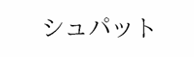
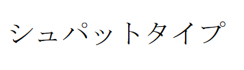
The plaintiff’s trademark was registered for various designated goods, including Class 9 “dust covers for fabric keyboards,” Class 12 “bicycle basket covers,” Class 18 “portable shopping bags,” Class 21 “laundry nets for clothing,” Class 24 “duvet covers,” Class 25 “raincoats,” and Class 28 “storage bags exclusively for plastic toys for infants.”
The defendant’s product was a shopping bag, specifically a portable shopping bag, falling within the scope of the designated goods covered by the plaintiff’s trademark registration.
In addition, the plaintiff’s product possessed a characteristic configuration whereby it could be stored in a belt-like form and could transition among three states: an extended state, a state for use as a bag, and a rolled-up state. The defendant’s product shared these same characteristics.
The defendants (the corporate defendant and the individual defendant) failed to appear at the oral hearing despite proper service and did not submit an answer or any preparatory briefs. Accordingly, a deemed admission (Article 159(1) of the Code of Civil Procedure) was established, and the court treated the plaintiff’s pleading facts as uncontested.
Court’s Decision
(1) Similarity Between the Plaintiff’s Trademark and the Defendant’s Mark
The court determined trademark similarity in accordance with the standard established in the Shozan case (Supreme Court, 1964 (Gyo-Tsu) No. 110).
In this case, both marks shared the standard-character expression “Shupatto.” They also shared the initial portion of their pronunciation. The word “Type” merely indicates a category or type and has no particular significance. Since both marks are coined terms that do not evoke any specific concept, the court concluded that the two marks were similar.
(2) Whether the Plaintiff’s Product Configuration Constitutes a “Product Indication”
The court evaluated whether the product configuration qualified as a “product indication” by applying the requirements under Article 2(1)(i) of the Unfair Competition Prevention Act:
- The product configuration must objectively possess characteristics that are markedly different from those of similar products (special distinctiveness); and
- Consumers must recognize the configuration as indicating goods originating from a particular business (secondary meaning or public recognition).
In this case, the court found that, at the time sales began, there were no competing products possessing the same characteristics as the plaintiff’s product, thereby supporting the finding of special distinctiveness.
Furthermore, the court found that, after the launch of the product, the plaintiff had engaged in promotional activities, resulting in coverage in numerous magazines, newspapers, and television programs, as well as the receipt of multiple design awards. Accordingly, the court held that the product configuration had acquired public recognition no later than the commencement of sales of the defendant’s product and therefore constituted a protectable “product indication.”
(3) Similarity Between the Parties’ Product Configurations and Likelihood of Confusion
Referring to the standards articulated in the Manpower case (Supreme Court, 1982 (O) No. 658) and the American Football case (Supreme Court, 1981 (O) No. 1166), the court held that similarity under Article 2(1)(i) of the Unfair Competition Prevention Act should be assessed based on whether traders and consumers would, from their overall impressions, memories, and associations arising from the products’ appearance and other features, perceive them as similar.
Applying this standard, the court found the plaintiff’s and defendant’s product configurations to be similar and concluded that the defendant’s sale of the products created a likelihood of confusion with the plaintiff’s source-identifying product configuration.
(4) Unfair Competition (Credit-Harming Acts)
The defendants affixed to their product a patent registration number corresponding to a patent they did not own and advertised on YouTube that the product was patented.
The court recognized these statements as false representations suggesting that the defendant’s product embodied a patented invention. However, even though such representations could enhance the perceived value of the defendant’s product, they did not necessarily diminish the objective value of the plaintiff’s product.
Accordingly, the court held that the conduct did not constitute the dissemination of false facts damaging the plaintiff’s business reputation and therefore did not amount to a credit-harming act under Article 2(1)(xxi) of the Unfair Competition Prevention Act.
(5) Violation of the Antimonopoly Act (Deceptive Customer Inducement)
For substantially the same reasons discussed above, the court held that the defendants’ representations regarding patent ownership were likely to mislead consumers into believing that the defendant’s product was superior or more advantageous than it actually was and therefore constituted deceptive customer inducement.
However, with respect to injunctive relief under the Antimonopoly Act, the court held that although the deceptive conduct had likely caused some degree of harm to the plaintiff, the plaintiff had continued to sell substantial quantities of its own products. Under these circumstances, the court found no basis to conclude that the plaintiff had suffered, or was likely to suffer, the “substantial harm” required for injunctive relief.
(6) Damages
The court found that at least 30,000 units of the defendant’s product had been sold and that the plaintiff’s marginal profit per unit was at least JPY 2,175. On this basis, the court determined that the presumptive damages under Article 5(1) of the Unfair Competition Prevention Act amounted to no less than JPY 65.25 million.
Because the plaintiff sought only JPY 2 million in damages, the court awarded that amount in full as damages having a reasonable causal connection to the defendants’ conduct.
Notably, although the plaintiff also asserted design patent infringement as part of its cause of action, the court did not expressly address that issue in its judgment.
Key Findings and Practical Implications
This case demonstrates that, in assessing the similarity of word marks, the addition of supplementary wording such as “Type” may not affect the similarity analysis where the added term lacks particular meaning or source-identifying significance. In such circumstances, the additional wording may effectively be disregarded for purposes of comparing the marks.
The case also illustrates that a product configuration may qualify as a protected “product indication” under the Unfair Competition Prevention Act where the product was distinctive when introduced to the market and subsequently acquired public recognition. The court’s reasoning suggests that parties should be prepared to establish both the absence of similar products at the time of launch and the development of public recognition through advertising, media coverage, awards, and other evidence.
On the other hand, the court held that a false claim of patent ownership does not automatically amount to a credit-harming act against a competitor. The existence of a false representation and the separate question of whether such representation harms a competitor’s business reputation must be examined independently.
Finally, because the defendants failed to appear and submit any defense, the case proceeded on the basis of deemed admissions. The decision demonstrates how a defendant’s failure to respond can significantly affect the outcome of litigation.
The contents of this article are provided for general informational purposes only and do not constitute legal advice.
Author: Urara Sudo, Attorney-at-Law (Daini Tokyo Bar Association)
Contact: u_sudo☆nakapat.gr.jp (replace ☆ with @)