【Trademark】 A Case in Which Separate Observation of “月見” in Indications for Food Products Containing That Term Was Rejected and Infringement of the Registered Trademark “月見” Was Not Found
Osaka District Court October 15, 2026 2026 (Wa) 3294 Action for Damages
Summary
The Plaintiff, the owner of the registered trademark “月見” (Tsukimi; “Moon Viewing”) (designated goods: Class 30, “boxed lunches and rice balls”), alleged that the Defendant’s use of the indications “月見おむすび” (Tsukimi Omusubi; “Moon-Viewing Rice Ball”) and others for rice balls containing a seasoned boiled egg infringed the Plaintiff’s registered trademark right, and sought damages and other relief. With respect to the five marks used by the Defendant (the “Defendant’s Marks”) displayed on the packaging, shelf cards, and posters, the court, taking into account the manner of display, the general meaning and usage of the word “月見,” the purpose of the campaign, and the actual circumstances of trade, including product offerings by other companies, rejected the extraction of the “月見” portion alone from the Defendant’s Marks for the purpose of determining similarity, and dismissed the Plaintiff’s claim on the ground that the Plaintiff’s Registered Trademark and each of the Defendant’s Marks were not similar in appearance, sound, or concept.
Case Overview
|
Plaintiff’s Mark (the Trademark) |
Defendant’s Marks |
|
Mark: 月見 (standard characters) Goods: “boxed lunches and rice balls” in Class 30 |
|
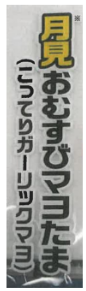
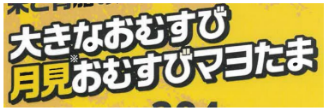
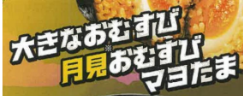
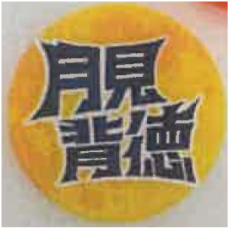

(Reference) Packaging, etc. of the Defendant’s Product (quoted from the appendix to the judgment)
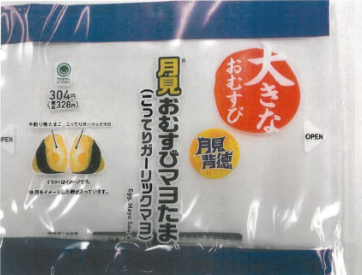
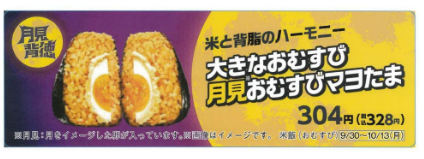
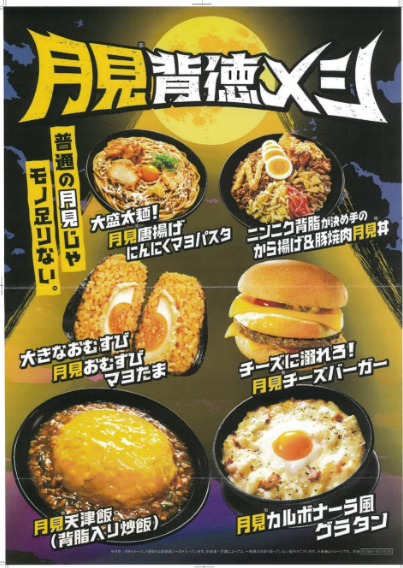
The Plaintiff owns a trademark right for the standard-character registered trademark “月見,” designating “boxed lunches and rice balls” in Class 30 (Trademark Registration No. 6095738; the Plaintiff’s registered trademark is hereinafter referred to as “the Trademark”). From around September 30, 2025, to around October 13, 2025, the Defendant conducted a campaign called “月見背徳メシ” (Tsukimi Haitoku Meshi; “Moon-Viewing Guilty-Pleasure Meal”), and, as one of the products covered by the campaign, sold at retail in its directly operated stores, and sold wholesale to its franchise stores, a rice ball containing a seasoned boiled egg (the “Defendant’s Product”). The Defendant’s Marks 1 through 5 shown above were displayed on the packaging of the Defendant’s Product, shelf cards at the location where the product was displayed, and campaign posters in the stores. Alleging that the sale of the Defendant’s Product infringed the trademark right in the Trademark, the Plaintiff sought payment, pursuant to Article 709 of the Civil Code, of JPY 1 million in damages as a partial claim, together with delay damages.
Court’s Decision
(1) Method of Determination
Referring to the judgment of the Third Petty Bench of the Supreme Court dated February 27, 1968, Case No. 1964 (Gyo-Tsu) 110, and the judgment of the Third Petty Bench of the Supreme Court dated March 11, 1997, Case No. 1994 (O) 1102, the court stated that the similarity of trademarks should be determined through an overall consideration of the impressions, memories, associations, and other effects that their appearance, concept, sound, and other features produce on traders and consumers, while taking into account the actual circumstances of trade.
The court also referred to the judgment of the First Petty Bench of the Supreme Court dated December 5, 1963, Case No. 1962 (O) 953, the judgment of the Second Petty Bench of the Supreme Court dated September 10, 1993, Case No. 1991 (Gyo-Tsu) 103, and the judgment of the Second Petty Bench of the Supreme Court dated September 8, 2008, Case No. 2007 (Gyo-Hi) 223, and stated that it is not permissible to extract a constituent part of a composite trademark and determine similarity by comparing that part alone with another person’s trademark, except where that part gives a strong and dominant impression as a source-identifying sign, where the remaining part does not give rise to any sound or concept as a source-identifying sign, or in similar circumstances.
(2) Defendant’s Mark 1, “月見おむすびマヨたま(こってりガーリックマヨ)” (Tsukimi Omusubi Mayo-Tama (Kotteri Gārikku Mayo); “Moon-Viewing Rice Ball Mayo Egg (Rich Garlic Mayo)”)
The court found that the indication on the packaging as a whole constituted a single mark, and did not accept the Plaintiff’s argument that the mark “月見” or “月見おむすび” was being used.
With respect to separate observation, the court acknowledged that “月見” was displayed in yellow and prominently, and was consistently emphasized throughout the campaign, but rejected separate observation for the following reasons. First, the group of products that included the Defendant’s Product consisted of seasonal-campaign products using eggs resembling the moon as ingredients, and the emphasis on “月見” was intended to bring the common product concept to the forefront and, therefore, “cannot be regarded as being emphasized as a source-identifying sign.” The court also stated that, because food names such as “月見〇〇” (Tsukimi XX; “Moon-Viewing XX”) were common, consumers would perceive “月見” without separating it from the remainder of the indication. Furthermore, in light of the actual circumstances of trade in which other companies also sold products under similar names, the court stated that it was difficult to conceive that “月見” functioned as a sign identifying a particular source. In addition to the foregoing, and also taking into account the indications on the shelf cards and elsewhere, the court stated that there were “actual circumstances of trade requiring separate observation to be rejected.”
The court then held that it was appropriate to compare, at a minimum, “月見おむすびマヨたま” (Tsukimi Omusubi Mayo-Tama; “Moon-Viewing Rice Ball Mayo Egg”) as a continuous and indivisible whole. It held that the marks were clearly not similar in appearance or sound, and were also not similar in concept because the concept of a rice ball seasoned with mayonnaise was added. The court did not, however, rule out the possibility of separate observation of the “(こってりガーリックマヨ)” (Kotteri Gārikku Mayo; “Rich Garlic Mayo”) portion.
(3) Defendant’s Marks 2 and 3
With respect to Defendant’s Mark 2 on the shelf cards and Defendant’s Mark 3 on the posters, the court likewise found that the indication as a whole constituted the mark. It then rejected separate observation on the grounds that, as with Defendant’s Mark 1, the emphasis on “月見” did not constitute emphasis as a source-identifying sign and in light of the general usage and the actual circumstances of trade.
With respect to similarity, the court held that Defendant’s Mark 2 was not similar in appearance, sound, or concept even when only the “月見おむすびマヨたま” portion was considered, and that Defendant’s Mark 3 was not similar in any of those respects even on the assumption that there was room to separately observe that portion.
(4) Defendant’s Mark 4, “月見背徳” (Tsukimi Haitoku; “Moon-Viewing Guilty-Pleasure”)
With respect to Defendant’s Mark 4 on the packaging and shelf cards, the court likewise found that the indication as a whole constituted the mark.
With respect to separate observation, the court found that “月見” and “背徳” (Haitoku; “Guilty-Pleasure”) were displayed continuously and indivisibly, without differences in size, typeface, or color, and that “月見” alone was not emphasized. The court then found that, in view of the purpose of the campaign, “月見” did not give a strong and dominant impression as a source-identifying sign, and that this was “all the more so” in light of the general usage of the word and the actual circumstances of trade. On the other hand, the court stated that “背徳” was not a generic name or the like in relation to the Defendant’s Product and “functions to a certain extent as a source-identifying sign,” and rejected separate observation.
With respect to similarity, in addition to the differences in appearance and sound, the court held that the marks were not similar in concept because “背徳” gave rise to the concept of acting contrary to morality or the like and, in the food-related market, to the concept of a high-calorie food that may cause health concerns.
(5) Defendant’s Mark 5, “月見背徳メシ”
With respect to Defendant’s Mark 5 on the posters, the court likewise found that the indication as a whole constituted the mark.
With respect to separate observation, the court stated that the display of “月見” in yellow was intended to bring to the forefront the product concept common to the group of products, and did not constitute emphasis as a source-identifying sign. In addition, in light of the general usage of the word, the actual circumstances of trade, and the court’s statements concerning “背徳,” the court rejected separate observation.
With respect to similarity, in addition to the differences in appearance and sound, the court held that the marks were not similar in concept because the concept of “a meal contrary to morality or the like, and, by extension, a high-calorie meal that may cause health concerns” arose from the mark.
(6) Issues Not Decided
Because the court found that none of Defendant’s Marks 1 through 5 was similar to the Trademark, it dismissed the Plaintiff’s claim “without the need to consider the remaining issues.” Accordingly, the judgment did not specifically decide whether the Defendant’s Marks were used as trademarks, whether there were grounds for invalidation of the registration of the Trademark under Article 3(1)(iii) or Article 4(1)(xvi) of the Trademark Act, whether the exercise of the trademark right in the Trademark was restricted under Article 39 of the Trademark Act and Article 104-3(1) of the Patent Act, whether the Plaintiff’s exercise of its rights constituted an abuse of rights, or whether damages existed and, if so, in what amount.
Key Findings and Practical Implications
This judgment is one example in which the court held that, even where an indication contains characters identical to a registered trademark, separate observation of that character portion may not be permitted, and similarity to the registered trademark may be denied when the indication is considered as a whole.
In this case, the characters “月見” were displayed in a color different from the other characters and were emphasized throughout the campaign. However, the court rejected separate observation of “月見” on the grounds that: (1) the annotation on the packaging, the illustrations, and the content of the group of products showed that the emphasis was intended to bring the common product concept to the forefront and did not constitute emphasis as a source-identifying sign; (2) names of dishes and foods such as “月見〇〇” were widely and commonly used; and (3) other companies also sold foods containing eggs under similar names. With respect to Defendant’s Marks 4 and 5, the court also took into account that the “背徳” portion was not a generic name or the like in relation to the Defendant’s Product and had a certain degree of function as a source-identifying sign. However, this determination was based on an overall consideration of the manner of display and the actual circumstances of trade in this case, and does not mean that separate observation will always be rejected even if a particular word is emphasized by color or other means.
The Trademark was filed on February 27, 2018, and was registered on November 9 of the same year without any notification of reasons for refusal being issued during the examination stage. This prosecution history shows that, at least at the time of the decision to register, the Japan Patent Office did not refuse registration of the Trademark, consisting solely of the characters “月見,” on the ground that it lacked distinctiveness in relation to the designated goods “boxed lunches and rice balls,” or on similar grounds. The judgment did not decide the grounds for invalidation asserted by the Defendant, and did not directly determine whether, or to what degree, the Trademark itself possessed distinctiveness. Even where a word, when combined with another word, may be used as an expression indicating the content or other aspects of goods, it is possible in practice for trademark registration to be granted if that word alone cannot be regarded as directly indicating the specific quality or other characteristics of the goods. However, whether a trademark may be registered and whether a specific indication used by a third party is similar to the registered trademark are separate issues. In an infringement action, similarity is determined by taking into account the overall composition of the other party’s indication and the actual circumstances of trade. Therefore, even where a word has been registered as a standalone word mark, if a third party uses that word in combination with other words, separate observation of the word portion may be rejected and the indication as a whole may be found dissimilar.
Accordingly, before enforcing its rights, a trademark owner should carefully consider whether separate observation is likely to be permitted and whether similarity between the indication as a whole and the registered trademark is likely to be found, taking into account the overall composition of the other party’s indication, the manner in which the common character portion is displayed, the general usage of the word, and the status of use by other companies in the same industry. In addition, from the stage of filing and obtaining rights in a trademark, practical measures may include selecting a trademark with stronger distinctiveness and also obtaining registration for trademarks combining distinctive characters, devices, or other elements, while considering not only registrability but also the scope within which the trademark can be enforced after registration. Of further importance for a trademark containing a word that evokes the content or other aspects of goods would be the continuous use of the trademark to increase its recognition as the company’s own brand.
On the other hand, for businesses using a word common to a registered trademark in a product name or promotional indication, designing the indication as a whole so that consumers understand that the word represents the content of the product or the concept of the campaign appears to contribute to the prevention of disputes. It is informative that the judgment took into account, as one of the circumstances in its determination, the annotation on the packaging stating, “※月をイメージした卵が入っています。” (Tsuki o imēji shita tamago ga haitte imasu; “Contains an egg designed to evoke the image of the moon.”), and an illustration showing that the product contained a seasoned boiled egg. However, the conclusion in the judgment resulted from consideration of the overall composition of the indication, the general usage of the word, the actual circumstances of sales by other companies, and other matters, and does not mean that the addition of an annotation or illustration alone is sufficient. When selecting a product name or campaign name, it is advisable to check the possibility that the indication as a whole may conflict with prior trademarks and to consider whether each constituent part performs the function of explaining the content of the product, communicating the concept, or identifying the source.
The judgment did not decide whether the Defendant’s Marks constituted use as trademarks, whether there were grounds for invalidation of the Trademark, whether the Plaintiff’s exercise of its rights constituted an abuse of rights, or whether damages existed and, if so, in what amount. Accordingly, it cannot be concluded on the basis of this judgment that the indication “月見” does not constitute use as a trademark at all in relation to the designated goods at issue, or that the Trademark is invalid. It should also be noted that this judgment is a first-instance judgment.
※This article is intended solely to provide general information and should not be construed as legal advice.
Author: Eriko Kitahara