【Trademark】 Case Concerning the Similarity of a Composite Mark Consisting of a Figurative Element and “SORA,” and the Similarity of Beauty-Related Services
the Intellectual Property High Court (IP High Court) April 13, 2026 2025 (Gyo-Ke) 10111 Action for Revocation of Trial Decision
Summary
The Plaintiff sought revocation of a trial decision that had upheld an examiner’s decision of refusal on the ground that the applied-for mark, consisting of a figurative element and the word “SORA,” was similar to a cited earlier mark consisting of a figurative element and the word “SORA,” and therefore fell under Article 4(1)(xi) of the Trademark Act. The Court held that, with respect to both marks, it was permissible to extract the “SORA” word element as the dominant portion, and that the dominant portions were similar in appearance, identical in pronunciation, and either incapable of conceptual comparison or identical in concept. Accordingly, it found the marks to be similar. The Court also found that the designated services of the applied-for mark were included within the cited designated service of “beauty care” and that, even taking into account the actual circumstances of trade, the services were similar. The Court therefore dismissed the Plaintiff’s claim.
Case Overview
|
(Left) Subject Mark/Plaintiff’s Mark |
(Right) Cited Mark/Defendant’s Mark |
|
|
|
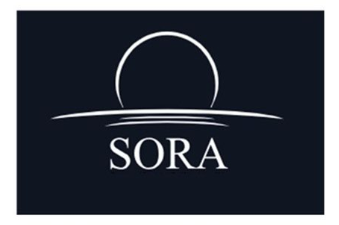
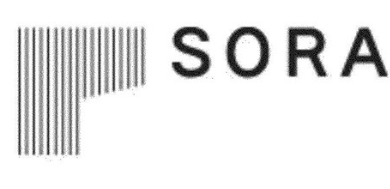
The Plaintiff filed an application for registration of a composite mark consisting of a black horizontally elongated rectangle as a background, with a figurative element formed by a combination of a white arc and multiple curved lines in the center and the white Roman letters “SORA” arranged vertically. The designated services of the applied-for mark were Class 44 services, namely “facial and body care incorporating massage; body care for beauty purposes incorporating massage.” The cited mark was a composite mark consisting of a figurative element and the Roman letters “SORA” placed to its right, and had been registered for the designated services “beauty care; hairdressing” in Class 44.
The Japan Patent Office compared the “SORA” word elements of the applied-for mark and the cited mark as the dominant portions and found the marks to be similar. It also found that the designated services of the applied-for mark and those of the cited mark were similar because they shared the common purpose of enhancing physical appearance, were often provided by the same business operators, and were directed to the same consumers. Accordingly, it concluded that the applied-for mark fell under Article 4(1)(xi) of the Trademark Act and dismissed the appeal against the examiner’s decision of refusal.
The Plaintiff argued that the applied-for mark should be observed as an integrated whole consisting of both the figurative and word elements and that it was impermissible to extract only the “SORA” word element. The Plaintiff also argued that the designated services of the applied-for mark differed from the cited designated service of “beauty care,” which is provided by licensed beauticians holding national qualifications, and that there were no actual circumstances of trade in which both services were provided by the same business operator. On that basis, the Plaintiff sought revocation of the trial decision.
Court’s Decision
(1) Similarity of the Marks
With respect to the similarity of the marks, the Court referred to the “Tsutsumi no Ohinakkoya” case (Supreme Court, September 8, 2008, Saibanshū Minji No. 228, p. 561), and held that even in the case of a composite mark, where a particular portion gives a strong and dominant impression as an indication of source, that portion may be extracted as the dominant portion and compared.
In both the applied-for mark and the cited mark, the figurative element and the “SORA” word element are recognized separately in appearance. The Court further held that the black rectangular background of the applied-for mark did not affect this conclusion. No specific pronunciation or concept arises from the figurative elements. In contrast, the word “SORA” gives rise to the pronunciation “Sora,” and, as a coined word, either gives rise to no specific concept or gives rise to the concept of “sky.” Accordingly, the dominant portion of both marks was found to be “SORA.” As their appearances were similar, their pronunciations identical, and their concepts either incapable of comparison or identical, the Court held the marks to be similar.
The Plaintiff argued, based on explanations on the respective websites, that the figurative element of the applied-for mark represented “sunset,” “sunrise,” and “tranquility,” while the figurative element of the cited mark represented “a place where hair is cut.” The Court rejected this argument, holding that the actual circumstances of trade that may be considered in assessing similarity are limited to general and constant circumstances relating to the designated services as a whole and do not include special and limited circumstances relating to current modes of use. The Plaintiff’s argument that the owner of the cited mark had assigned a particular meaning to the word “SORA” on its website was likewise not accepted for the same reason.
(2) Similarity of the Services
The Court referred to the ARIKA case (Supreme Court, Third Petty Bench, December 20, 2011, Case No. 2009 (Gyo-Hi) 217, Minshū Vol. 65, No. 9, p. 3568), and held that the meaning of designated services should be interpreted with reference to the classifications and subclasses under the Trademark Act Enforcement Order and Enforcement Regulations, the explanatory notes to the Nice Classification, and the identity of similarity groups under the Examination Guidelines for Similar Goods and Services.
The Court further held that the similarity of services should be determined, as stated in decisions such as the “Tachibana Masamune” case (Supreme Court, June 27, 1961, Minshū Vol. 15, No. 6, p. 1730), not by whether confusion arises regarding the services themselves, but by considering the actual circumstances of trade, including the relationship between the means and purposes of the services and whether they are ordinarily provided by the same business operator or at the same location, and then determining whether the use of identical or similar marks would create a risk that consumers would mistakenly believe that the services originate from the same business operator.
On that basis, the Court considered the Class 44 heading in the Schedule to the Trademark Act Enforcement Order, the subclassification of “beauty care; hairdressing” under the Trademark Act Enforcement Regulations, the explanatory notes concerning “beauty care,” and the dictionary meanings of “beauty” and “care.” It held that “beauty care” among the cited designated services broadly includes services relating to beauty care intended to improve facial appearance, personal appearance, and hairstyles. The Court therefore found that the designated services of the applied-for mark, which are services relating to beauty care provided to individuals, are included within that category.
The Court further found that both services share the characteristics that their consumers are ordinary users and that their purpose is beauty enhancement. In addition, the Court made the following two findings. First, while aesthetic salons provide massages to the face, neck, and other areas, beauty salons also provide facial and body care incorporating massage, such as aroma treatments and facial esthetic services. Second, the Ministry of Health, Labour and Welfare website refers to expanding services such as makeup, nail care, and esthetic treatments to meet customer demand for enhanced appearance and considering relaxation-oriented service menus during permanent-wave treatments, and proposes that beauty salons consider offering facial and body care incorporating massage in order to improve profitability. Based on these findings, the Court held that the two services are not necessarily provided by different business operators or at different locations and that, where identical or similar marks are used, there is a risk that consumers would mistakenly believe that the services originate from the same business operator. Accordingly, it found the services to be similar.
The Plaintiff had argued that “beauty care” as a service can only be provided by holders of the national qualification of beautician and is limited to services directed at the head, making it clearly different from the designated services of the applied-for mark. The Court responded that this conclusion is not affected by the fact that the Beauticians Act defines “beauty” as improving a person’s appearance by means such as permanent waves, hair arrangement, and cosmetics (Article 2(1) of the Beauticians Act), and prohibits unlicensed practice and operations outside licensed beauty salons (Articles 6 and 7 of the Beauticians Act).
The Plaintiff also argued that consumers of spa services and beauty services generally search for service locations in advance and confirm the contents of the services before visiting, and that consumers exercising ordinary care would not be confused as to source even if marks generating the same pronunciation were used. The Court did not accept this argument, holding that, as stated above, use of a mark identical or similar to the cited mark for the designated services of the applied-for mark would create a risk that consumers would mistakenly believe that the services originate from the same business operator.
(3) Conclusion
The Court held that the applied-for mark is similar to the cited mark and that the designated services of the applied-for mark are identical or similar to the designated services of the cited mark. It therefore found that the applied-for mark falls under Article 4(1)(xi) of the Trademark Act. Concluding that there was no error in the trial decision, the Court dismissed the Plaintiff’s claim.
Key Findings and Practical Implications
This judgment addressed the similarity of a composite mark consisting of a figurative element and text, as well as the similarity of designated services.
With respect to the similarity of the marks, the Court, in accordance with the standards established in Supreme Court precedents such as the “Tsutsumi no Ohinakkoya” case, extracted the “SORA” word element as the dominant portion in both the applied-for mark and the cited mark because the figurative and word elements were recognized separately in appearance and the figurative elements gave rise to no pronunciation or concept serving as an indication of source. The applied-for mark consisted of a design in which a figurative element and wording in white were placed within a black horizontally elongated rectangular background, but the Court held that this feature did not affect the conclusion that the elements would be recognized separately.
Where a similar mark owned by another party exists, it is common in practice to attempt differentiation by adding other elements such as figurative features or by creating a logo design so as to increase visual differences. However, it should be noted that, in examination proceedings, even if differentiation is attempted through logo design, similarity may still be assessed after extracting the textual element as the dominant portion where the textual element is recognized separately and the figurative element gives rise to no pronunciation or concept.
The judgment also held that, even where a website explains the origin of a figurative element or the meaning of each letter in “SORA,” such matters do not constitute the general and constant actual circumstances of trade that should be considered in determining similarity and therefore do not affect the outcome. In this regard, when determining applicability of Article 4(1)(xi) of the Trademark Act, the manner in which a mark is used or meanings assigned by the applicant’s own business are unlikely to be taken into account because they are regarded as special and limited circumstances (see the “Hodogaya Chemical” case, Supreme Court, April 25, 1974, Case No. 1972 (Gyo-Tsu) 33). Particular attention should therefore be paid to the fact that such matters have limited effectiveness as counterarguments, especially during examination and trial proceedings.
Next, regarding the similarity of services, the Court held that the fact that “beauty care” is subject to a qualification system under the Beauticians Act does not affect the analysis and interpreted the cited designated service of “beauty care” as broadly encompassing services relating to beauty care. The meaning of designated services is, in principle, interpreted with reference to classifications and explanatory notes, and their similarity is determined based on the actual circumstances of trade. It should be noted in practice that similarity is not determined directly by qualification categories under industry-specific laws.
Where there is a prior trademark registration in the field of “beauty care” in Class 44, the possibility of conflict with the prior registration should be anticipated even for services involving esthetic treatments or massage. As this case demonstrates, limiting the services by stating that they “incorporate massage” may not be sufficient to avoid conflict between the services.
Moreover, insofar as the judgment was based on actual circumstances in which esthetic salons and beauty salons provide such services, it is considered that the Court’s conclusion regarding the similarity of the services is appropriate.
※This article is intended solely to provide general information and should not be construed as legal advice.
Author: Eriko Kitahara