【Unfair Competition Prevention Act★】A case in which the Tokyo District Court held as follows: the court recognized the implied license granted by the Defendant to the Plaintiff; the court then found that acts by the Defendant, a local public entity, in making or disseminating statements to the effect that “the Plaintiff has produced and used the character named “Chiitan☆” without the Defendant’s permission, thereby infringing the Defendant’s copyright or constituting unfair Competition”, constitutes “the act of making or circulating false allegations” as prescribed in Article 2, Paragraph 1, Item 21 of the Unfair Competition Prevention Act, among other things; and the court partially upheld the Plaintiff’s claim based on Article 1, Paragraph 1 of the State Redress Act.
Tokyo District Court Decision of February 7, 2025 (Case No. 18479 (Wa) 2021 ˗ Presiding Judge Kokubu)
Case Summary
The principal action of this case is litigation in which the Plaintiff, who uses the character named “Chiitan☆” (hereinafter referred to as “character Chiitan”), asserts the following three claims against the Defendant, an ordinary local public entity: acts by the Defendant, namely, notification to the Plaintiff’s business partners and statements made by the Defendant’s representative at a press conference (collectively, “the Defendant’s acts”), constitute acts that harm the business reputation of a business competitor, as described in Article 2, Paragraph 2, Item 21 of the Unfair Competition Prevention Act; due to the Defendant’s acts, the Plaintiff was forced to suspend all activities related to the character Chiitan, resulting in damages related to loss of profits from appearance fees and royalties, as well as damages related to the production costs of the anime that could no longer be broadcast; and, based on the foregoing, the Plaintiff seeks payment for the aforementioned damages and late payment interest, primarily under Article 709 of the Civil Code and alternatively under Article 1, Paragraph 1 of the State Redress Act.
The counterclaim in this case is litigation in which the Defendant, who uses the character named “Shinjo-kun” (hereinafter referred to as “character Shinjo-kun”), asserts the following against the Plaintiff: the acts of the Plaintiff in making or creating the character Chiitan original illustration shown below, the character Chiitan costume shown below, and the photographs of the character Chiitan costume shown below infringe the Defendant’s adaptation right with respect to the character Shinjo-kun original illustration shown below; using the character Chiitan illustration, the character Chiitan costume, and the photographs of the character Chiitan costume infringe the Defendant’s reproduction right, right of transfer, right of public transmission, and right of presentation with respect to the character Chiitan illustration, the character Chiitan costume, and the photographs of the character Chiitan costume, which are exclusively held by the Defendant as the rights of the original author regarding the exploitation of derivative works. Based on the foregoing, the Defendant seeks an injunction against the plaintiff under Article 112, Paragraph 1 of the Copyright Act, disposal under Article 112, Paragraph 2 of the same Act, and damages based on tort, among other claims.
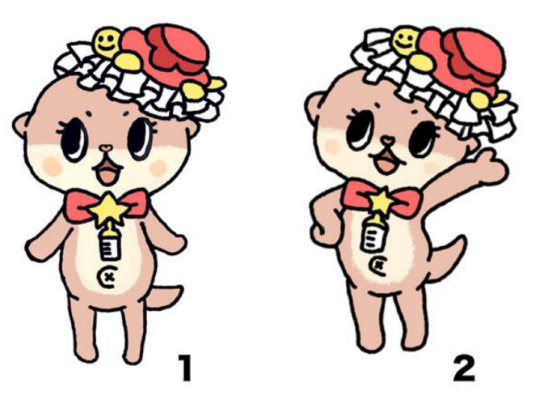
“character Chiitan” original illustration, cited from the list of the Plaintiff’s works 1
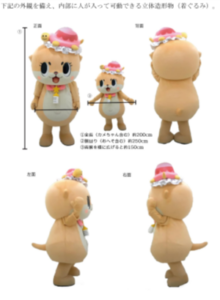
“character Chiitan” costume, cited from the list of the Plaintiff’s works 2
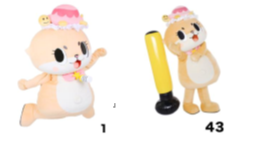
“character Chiitan” costume, cited from the list of the Plaintiff’s works 2
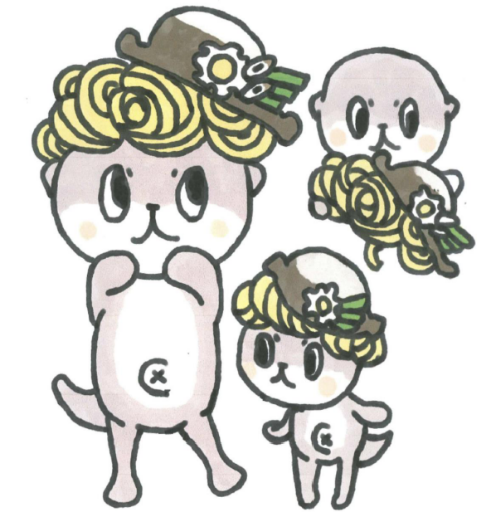
“character Shinjo-kun” original illustrations, cited from the list of the Defendant’s works 1
In this judgment, as stated in the summary of judgment described below, the Plaintiff’s claim based on Article 1, Paragraph 1 of the State Redress Act was partially upheld: it is recognized that the Defendant implicitly granted permission to the Plaintiff to conduct independent commercial activities using the character Chiitan; neither invalidity due to mistake, rescission due to fraud, nor termination of agreement concerning said permission is established; in light of the foregoing, it must be said that the Defendant’s legal assertion that the Plaintiff’s acts constitute infringement of the Defendant’s copyright or acts of unfair competition and that the Plaintiff was continuing and seeking to expand activities infringing the Defendant’s rights is groundless, as the asserted infringement and such acts do not exist; furthermore, the assertion that the Plaintiff created the character Chiitan without the Defendant’s permission and used it in various economic activities, including paid television appearances, must be regarded as contrary to objective truth; all of the foregoing correspond to “false allegations” as prescribed in Article 2, Paragraph 1, Item 21 of the Unfair Competition Prevention Act, and the acts in question by the Defendant constitute “acts of making circulating false allegations of fact”; and it is recognized that at least the Defendant’s representative and officers were negligent. On the other hand, the court also found that the term of the above-mentioned permission had not expired, and therefore, dismissed all of the Defendant’s counterclaims.
Summary of the Judgment
1. Concerning Applicability of the Civil Code and the Unfair Competition Prevention Act to the Defendant’s Acts in This Case
The Defendant’s acts in this case constitute “exercise of public authority” as described in Article 1, Paragraph 1 of the State Redress Act. That is, these acts were performed by a public official engaged in the exercise of public authority of the Defendant, an ordinary local public entity, in the course of carrying out his or her duties. Article 2, Paragraph 2, Item 21 of the Unfair Competition Prevention Act corresponds to “the Civil Code” as referred to in Article 4 of the State Redress Act. Therefore, in the event that the Defendant’s acts in this case, intentionally or negligently, constitute acts of commercial defamation as prescribed in Article 2, Paragraph 1, Item 21 of the Unfair Competition Prevention Act and infringe upon the Plaintiff’s business interests, it must be said that the Defendant is liable for compensation to the Plaintiff for such damage, in accordance with Article 1, Paragraph 1 of the State Redress Act.
2. Concerning Applicability of the Defendant’s Acts to Article 2, Paragraph 1, Item 21 of the Unfair Competition Prevention Act
(1) Whether a “competitive relationship” exists between the Plaintiff and the Defendant
The “competitive relationship” prescribed in Article 2, Paragraph 1, Item 21 of the Unfair Competition Prevention Act, can be reasonably construed to mean that the possibility of having common consumers or traders is sufficient with respect to the businesses of both parties. The Plaintiff and the Defendant have each character participate in events using a costume of the character, and have each character appear in television programs and commercials using such costumes of the characters; in addition, the Plaintiff and the Defendant have permitted the sale of goods bearing illustrations of the characters and photographs of the character costumes; thus, it can be said that they are conducting the same business and therefore, there is a possibility they have common consumers and traders. Based on the foregoing, at the time of the Defendant’s acts in this case, it can be recognized that they were in a “competitive relationship” as prescribed in Article 2, Paragraph 1, Item 21 of the Unfair Competition Prevention Act.
(2) Concerning whether it constitutes an “act of making or circulating facts”
(i) Concerning whether content that states infringement of rights or an act of unfair competition is regarded as a “fact”
A “fact” prescribed in Article 2, Paragraph 1, Item 21 of the Unfair Competition Prevention Act includes the expression of a legal opinion as to whether rights are infringed or whether an act constitutes unfair competition, and when the alleged infringement of rights, etc. does not actually exist, it is reasonable to construe that it constitutes a “false fact” as prescribed in the same Article.
(ii) Concerning the content made known or circulated
The content made known or circulated as prescribed in Article 2, Paragraph 1, Item 21 of the Unfair Competition Prevention Act should be recognized on the basis of the ordinary care and manner of reading or listening by the recipient of such content. In light of the above, the Defendant’s acts in this case are recognized as comprising as follows:
expression of a legal opinion that the Plaintiff infringes the Defendant’s copyright or constitute acts of unfair competition, and that the Plaintiff continues and seeks to expand activities infringing the Defendant’s rights; and
the fact that the Plaintiff, without the Defendant’s permission, created the character Chiitan, and has used it to engage in various economic activities including paid television appearances.
(iii) Whether sending documents addressed to television stations constitutes “making known”
With respect to a person who, together with a competitor, is infringing the rights of the notifier, the act of a competitor stating that the notifier’s rights are being infringed, even if it is possible for illegality to be excluded as part of a legitimate exercise of rights, it should be said that the act itself cannot be denied as constituting an “act of making known …” as prescribed in Article 2, Paragraph 1, Item 21 of the Unfair Competition Prevention Act.
(3) Whether the facts notified or disseminated are “false”
(i) Whether permission existed for the use and activities as to the character Chiitan, and whether such permission was invalidated due to mistake, rescinded due to fraud, or terminated by agreement
It is recognized that the Defendant implicitly granted the Plaintiff permission for the character Chiitan to engage in independent commercial activities; in regard to such permission, neither invalidation due to mistake, rescission due to fraud, nor termination of the agreement is established.
(ii) Application
In light of what has been stated in section (A) above, The Defendant’s legal assertion that the acts of the Plaintiff constitute infringement of the Defendant’s copyright or acts of unfair competition is groundless. That is, regarding the Defendant’s legal assertion that the Plaintiff is continuing and seeking to expand activities infringing the Defendant’s rights, it must be said that such asserted infringements, etc. do not exist. Furthermore, the assertion that the Plaintiff created the character Chiitan without the Defendant’s permission and used it for various economic activities, including paid television appearances, must be regarded as contrary to objective truth. Therefore, each of the above correspond to a “false fact” as prescribed in Article 2, Paragraph 1, Item 21 of the Unfair Competition Prevention Act.
3. Concerning the intent or negligence of the Defendant
In this case, although no written contract or other document was created between the Plaintiff and the Defendant evidencing that the Defendant granted permission to the Plaintiff for independent commercial activities involving the character Chiitan, the representative and employees of the Defendant, in carrying out the acts in question, had a duty of care to investigate the facts and to use appropriate expressions in accordance with those facts so as not to damage the business reputation of the Plaintiff; however, it must be said that they neglected this duty.
Comments
1.Whether the content of the notification or dissemination claiming infringement of rights or acts of unfair competition falls under “facts” (Summary 2 (2)(i) of the Judgment)
According to judicial precedent, in cases where the issue of whether defamation has occurred is in dispute, the expression of a legal opinion is interpreted as follows: “the expression of a legal opinion, even if it concerns a matter on which a court can render a judicial determination by a judgment, cannot be regarded as constituting an indication of fact for that reason alone ˗ rather, it should be considered an expression of opinion, or a commentary” (Supreme Court Decision of July 15, 2004 (“Datsu-Gomanizumu Sengen” case)).
In Summary 2(2)(i) of the Judgment, in light of the Supreme Court decision above, it was determined that the notification or circulation of content regarding infringement of rights or applicability as unfair competition acts also constitutes an expression of legal opinion and thus, an expression of opinion or commentary. Furthermore, it was found that the purpose of Article 2, Paragraph 1, Item 21 of the Unfair Competition Prevention Act is to prevent acts whereby a person, by notifying or circulating false facts contrary to objective truth, damages business reputation ˗ an important business asset ˗ thereby placing a competitor at a disadvantage and seeking to gain competitive advantage. On that basis, it was interpreted that, compared to merely notifying or circulating underlying facts, notification or circulation of content regarding infringement of rights or unfair competition acts, which poses a greater risk of directly damaging the business reputation of a competitor, is still included within “facts” as stipulated in said Article.
In this regard, the following academic commentary exists.
While a warning of intellectual property right infringement sent to a competitor’s business partner can be interpreted as an “expression of opinion or commentary,” it is also regarded as being included within “facts” as stipulated in Article 2, Paragraph 1, Item 21 of the Unfair Competition Prevention Act. In making a determination, it is necessary to weigh whether the act constitutes a legitimate exercise of intellectual property rights and whether it would discourage such exercise, in comparison with the maintenance of a fair competitive order, thereby deciding the limit permissible under socially accepted conventions. Furthermore, since a careful and detailed assessment of illegality is required, there appears to be room for the application of the doctrine of fair comment. In addition, whether negligence exists should also be determined through a comprehensive consideration of whether there is a risk of unnecessarily discouraging the exercise of the right holder’s rights and the interests of the competitor whose business reputation is impaired (Makiko TAKABE, “Detailed Practical Explanation of Unfair Competition Litigation” [in Japanese], Kinzai Institute for Financial Affairs, 2020, pp. 275-294).
There exist court cases, such as the following, which are considered to have been influenced by the above academic commentary (Maiko FUCHI, “Notification of Patent Infringement and Applicability as Unfair Competition Acts,” [in Japanese] AIPPI·JAPAN Journal, Vol. 69 (2024), No. 7, p. 498).
・Where a party in a competitive relationship, prior to a court rendering a judgment regarding intellectual property right infringement, notifies or circulates in advance a legal opinion differing from such judicial determination, it is appropriate to interpret that such opinion falls under “false facts” as prescribed in Article 2, Paragraph 1, Item 21 of the Unfair Competition Prevention Act (The Tokyo District Court judgment of October 28, 2022 (“Tubular-bodied Shoelace” case), which was affirmed by the Intellectual Property High Court judgment of April 27, 2023 (Case No.10111(Ne)2022)).
・Even if a patentee discovers an alleged infringer of the patent right and, prior to instituting litigation, sends a warning letter to said alleged infringer, and the court subsequently holds that there is no infringement of the patent right, if the sending of the warning letter is considered to fall within the scope of the patentee’s legitimate exercise of rights, such sending lacks illegality (Intellectual Property High Court judgment of April 27, 2023 (Case No.10111(Ne)2022 (“Tubular-bodied Shoelace” case))).
2. Regarding the Doctrine of Exclusion of Illegality, the Theory of Negation of Negligence, and the Doctrine of Fair Comment (Summary of Judgment 2(2)(iii) and Summary of Judgment 3)
In cases where content that warns of intellectual property right infringement in a notice of intellectual property right infringement sent to a competitor’s business partner is ultimately erroneous, judicial precedents have traditionally affirmed the applicability of Article 2, Paragraph 1, Item 21 of the Unfair Competition Prevention Act and have also generally found negligence as a matter of course (Tokyo High Court judgment of August 29, 2002 (“Ferromagnetic Metal Pigment” case), etc.).
In contrast, in judicial precedents or academic commentary, the doctrine of exclusion of illegality based on legitimate exercise of rights has at times gained prominence, and more recently, the substantially similar theory of negation of negligence has gained prevalence (Tokyo District Court judgment of July 6, 2006 (“Additive for Farmed-fish Feed” case), affirmed by Intellectual Property High Court judgment of May 29, 2007 (Case No. 10068 (Ne) 2006, etc.); Yuriko SAGARA, “Determination of Acts of Notification and Circulation of False Facts,” [in Japanese] in Toshiaki MAKINO et al. (eds.), “Theories and Practices of Intellectual Property Law 3: Trademark Law and Unfair Competition Prevention Law” (SHINNIPPON-HOKI PUBLISHING, 2007), p. 408; Hiroaki KIKUCHI, “Acts That Damage Business Reputations,” [in Japanese] in Toshiaki MAKINO et al. (eds.), “Practical Encyclopedia of Intellectual Property Litigation II” (SEIRIN SHOIN, 2014), p. 521; etc.).
Further, in recent times there has also been prominent academic commentary affirming the possibility of applying the judicial doctrine of fair comment as a ground for justification to exclude illegality in defamation cases (Supreme Court judgment of July 15, 2004 (“Datsu-Gomanizumu Sengen” case)); Makiko TAKABE, “Detailed Practical Explanation of Unfair Competition Litigation” [in Japanese] (Kinzai Institute for Financial Affairs, 2020), p. 285; Ryoko ISEKI, “Unfair Competition by Notification and Circulation of False Facts—Insights from the ‘Cybozu Case’,” in collected commemorative essays for Makiko TAKABE’s Judicial Retirement, “Shining Moments in Intellectual Property Litigation” [in Japanese] (Kinzai Institute for Financial Affairs, 2021), p. 527, etc.).
Under the circumstances described above, although it is understood that the present judgment was influenced by the arguments of the parties, the court recognized the Defendant’s implied permission and denied both the copyright infringement and its applicability as an act of unfair competition by the Plaintiff.
As a result, with respect to the Defendant’s acts in this regard, the content of the notification and circulation was determined to be false.
The case described above is subtlely delicate.
In the judgment, regarding the point whether the Plaintiff’s act of making statements to the Defendant’s (competitor’s) business partner, who is a co-actor of the competitor, to the effect that the competitor was committing rights infringement constitutes a “notification” as prescribed in Article 2, Paragraph 1, Item 21 of the Unfair Competition Prevention Act, the court referred to the general possibility of the doctrine of exclusion of illegality based on legitimate exercise of rights, but did not make a determination on this point.
Further, regarding the content made or circulated to the effect of rights infringement or applicability as an act of unfair competition, the court regarded it as an expression of opinion or comment in the form of a statement of a legal view, and interpreted it as being included in the “facts” prescribed in said Article, but did not mention the possibility of application of the doctrine of fair comment as a ground for exclusion of illegality with respect to this.
Furthermore, the court also affirmed in a relatively formal manner the Defendant’s negligence.
Summary of the Judgment (3)
This judgment, in substance, denies the doctrine of exclusion of illegality based on legitimate exercise of rights, and also does not adopt the substantially similar theory of negation of negligence. It can be said that this is consistent with the majority of academic commentary, which holds that the ordinary theory of negation of negligence should be applied, in which a high duty of care is imposed on those issuing intellectual property infringement warnings to a competitor’s business partners (Yoshiyuki TAMURA, “Overview of the Unfair Competition Prevention Act [2nd Edition]” [in Japanese] (Yuhikaku Publishing, 2003), p. 447; Masafumi SUZUKI, “Case Comment,” [in Japanese] Hanrei Hyōron No. 550 (Hanji No. 1870) (2004), p. 32; Yasuyuki ECHI, “Case Comment,” [in Japanese] L&T No. 55 (2012), p. 50; Ryo TAKABAYASHI, “Warning of Patent Infringement and Notification/Circulation of False Facts,” [in Japanese] in “Toward the Advancement of an Intellectual Property Nation: Commemorative Essays in Honor of Professor Minoru TAKEDA’s 80th Birthday” (Invention Promotion Association, 2013), p. 272; Yasuto KOMADA, “Unfounded Patent Infringement Warnings under the Unfair Competition Prevention Act,” [in Japanese] in Yoshiyuki TAMURA (ed.), “Intellectual Property and Public Domain, Volume 3: Unfair Competition Prevention Act & Trademark Act” (Keiso Shobo, 2023), p. 177; etc.).
Given that in judicial precedents, assertions and determinations of exclusion of illegality based on legitimate exercise of rights tend to be concentrated in cases concerning registered intellectual property law systems (Toshiya KANEKO, “Case Law on Infringement Warnings and the Disclosure of False Facts under the Unfair Competition Prevention Act,” [in Japanese] Patent, Vol. 76 (2023), No. 12, p. 185), it may be said that in cases concerning unregistered intellectual property law systems such as copyright and acts of unfair competition, a position was effectively taken that was negative toward the doctrine of exclusion of illegality based on legitimate exercise of rights and the substantially similar theory of negation of negligence.
[Keywords] Article 2, Paragraph 1, Item 21 of the Unfair Competition Prevention Act; Acts of commercial disparagement,; “Chiitan☆”; “Shinjo-kun”; Statement of legal view; Doctrine of fair commentary
※ The contents of this article are intended to convey general information only and cannot be understood as providing any legal advice.
Kei IIDA (Writer)
Attorney at Law & Patent Attorney (Daini Tokyo Bar Association)
Contact information for inquiries: k_iida☆nakapat.gr.jp (Please replace ☆ with @.)