
OUTLINE OF IPR BORDER ENFORCEMENT IN JAPAN
1. Introduction
Customs may suspend the import, export and transit of goods infringing Intellectual Property Rights (IPRs) at the border based on IPR owners’ applications therefor or ex officio. The IPRs therefor may be patent rights, utility model rights, design rights, trademark rights, copyrights, neighboring rights, plant breeders’ rights, and rights against unfair competitions such as confusingly misappropriations of well-known indications, misappropriations of famous indications, imitations of configurations of goods, circumvention of technological restriction measures to content, and misappropriations of trade secrets, etc. According to the amendments of the Trademark Act, the Design Act and the Customs Act, in October 2022, the private import directly from overseas distributors of goods infringing trademark rights and design rights has become suspensible by Customs.
2. Application for Suspension
(1) Introduction
IPR owner’s application for suspension to Customs is the procedure that the IPR owner requests Customs to initiate Identification Procedures in the case Customs detects goods suspected of infringing his/her IPR in import or export.
(2) METI’s Opinion or Designation on Unfair Competition
In case of application for suspension to Customs against unfair competition, in advance, the IPR owner shall apply for Minister of Economy, Trade and Industry (METI)’s opinion on confusingly misappropriation of a well-known indication, misappropriation of a famous indication, imitation of configuration of goods, or circumvention of technological restriction measure to content, or METI’s designation on misappropriations of trade secrets.
(3) Pre-consultation and Application
The IPR owner may apply for suspension to any and all Customs by submitting one application to one of Hakodate, Tokyo, Yokohama, Nagoya, Osaka, Kobe, Moji, Nagasaki, and Okinawa Customs. The application must show with evidence (i) the existence of an IPR, (ii) applicant’s ownership of the IPR, (iii) the likelihood of import or export of goods, (iv) the infringement by the goods of the IPR, and (v) how to identify the goods. In order to show the above (iv), court’s decision for (provisional) injunction against the import or export of the goods is not necessarily required, and Japan Patent Office (JPO)’s Hantei or attorney’s opinion may be useful. For preparing the application, the IPR owner may enjoy Customs’ pre-consultation services free of charge.
(4) Publication and Objection
Customs publishes the submission of the application on its website and notifies the same to the importer or exporter known to Customs through the application, and interested parties may submit their opinions and evidence on the application to Customs within 10 working days from the publication.
(5) IPR Expert Advisors’ Opinions
If Customs faces difficulties in determining whether goods subject to the application are infringing or not, Customs may designate three IPR Expert Advisors from candidates (attorneys at law, patent attorneys, or scholars) with sufficient knowledge and experience in the area of IPR for seeking opinions. In making a decision, Customs honors the majority of their opinions in principle.
(6) Acceptance or Rejection
In their decision, Customs may accept or reject the application. Customs’ decision accepting the application may be effective for 4 years at longest from the acceptance, and may be renewed. The applicant may file an objection to Customs’ decision rejecting the application before the Director General of Customs within 2 months from the notification of the decision.
(7) Publication of Acceptance
Customs publishes the acceptance of the application on its website.
(8) Time Frame
In general, it usually takes about one month from the application to Customs’ decision. In the case Customs seeks IPR Expert Advisors’ opinions, it usually takes about three or four months from the application to Customs’ decision.
(9) Official Fee
No official fee is required for IPR owner’s application for suspension to Customs.
3. Identification Procedures
(1) Introduction
Customs’ Identification Procedures are the procedures in which Customs makes a decision as to whether or not the suspected goods are infringing the IPRs.
(2) Initiation
In the case Customs detects goods suspected of infringing the IPR in the course of inspection on import or export, based on IPR owner’s application for suspension or ex officio, Customs initiates Identification Procedures, unless the case is subject to Investigation Procedures for Offences.
(3) Notification
Customs notifies the IPR owner and the importer or exporter of the initiation of Identification Procedures by providing them with relevant information such as names and addresses of parties concerned.
(4) Submission of Opinions and Evidence, Inspection and Sample Examination
The IPR owner and the importer or exporter may submit their opinions and evidence to Customs within 10 working days (3 working days for perishable items) from the notification of initiation. For this purpose, each party may apply for inspection of suspected goods before Customs. In the case based on IPR owner’s application for suspension, each party may inspect suspected goods through pictures taken and sent with e-mail by Customs. Further, in the case based on IPR owner’s application for import suspension, the IPR owner may also conduct Sample Examination (i.e. dismantlement, analysis) on the condition that all the requirements for Customs’ approval therefor are satisfied and the security is provided.
(5) Opinions by JPO, IPR Expert Advisors, MAFF, or METI
Based on the request by the IPR owner or the importer or exporter, or at its own initiative, Customs may seek opinions (i) to the JPO regarding the scope of a patent right, a utility model right, or a design right, (ii) to the IPR Expert Advisors regarding other issues on a patent right, a utility model right, or a design right, or issues on a trademark right, a copyright, or a neighboring right, (iii) to the Minister of Agriculture, Forestry and Fisheries (MAFF) regarding issues on a plant breeder’s right, or (iv) to the METI regarding issues on a right against unfair competition.
(6) Deposit
Customs may order the IPR owner, for the importer or exporter, to deposit the security to cover the damages caused by Identification Procedures. With the deposit of the security, Customs continues Identification Procedures, while, without the deposit of the security, Customs discontinues Identification Procedures and the goods are released.
(7) Discontinuance
In the case based on the application for import suspension under a patent right, a utility model right, a design right, or a right against misappropriation of trade secret, the importer may request Customs to discontinue Identification Procedures after the expiry of certain period. Based on the request, Customs orders the importer, for the IPR owner, to deposit the security to cover the damages caused by the import of the goods. With the deposit of the security, Customs discontinues Identification Procedures and the goods are released.
(8) Simplified Identification Procedures
Simplified Identification Procedures is applicable to Identification Procedures in import in which Customs makes a decision as to whether or not the suspected goods are infringing a trademark right, a copyright, a neighboring right, a plant breeder’s right, or a right against unfair competition, based on IPR owner’s application for suspension. According to the amendments of the Customs Act, in 2023, Simplified Identification Procedures has become applicable to a patent right, a utility model right, and a design right. If the importer does not submit any written objection to Customs about the notification of initiation during the designated period, Customs makes an infringement decision based on information in the application for suspension without asking any further opinions and evidence from parties concerned.
(9) Decision, and Release or Suspension
Customs makes a decision as to whether or not the suspected goods are infringing the IPRs, and notifies the decision to the IPR owner and the importer or exporter. In case of the decision denying infringement, import or export is permitted. The IPR owner may file an objection to Customs’ decision denying infringement before the Director General of Customs within 2 months from the notification of the decision. On the other hand, in case of the decision finding infringement, when the period for objection has passed and where no voluntary disposal (e.g. destruction, abandonment, reshipment (not allowed for goods infringing a trademark right, a copyright, or a neighboring right), obtaining consent from the IPR owner, removal of infringing parts) has been taken by the importer or exporter, Customs confiscates and destroys the infringing goods without any fees onto the IPR owner. The importer or exporter may file an objection to Customs’ decision finding infringement before the Director General of Customs within 2 months from the notification of the decision.
(10) Time Frame
In general, it usually takes about one month from the initiation to Customs’ decision. In the case Customs seeks opinions by JPO, IPR Expert Advisors, MAFF, or METI, it usually takes a few months from the initiation to Customs’ decision.
(11) Official Fee
No official fee is required for Customs’ Identification Procedures.
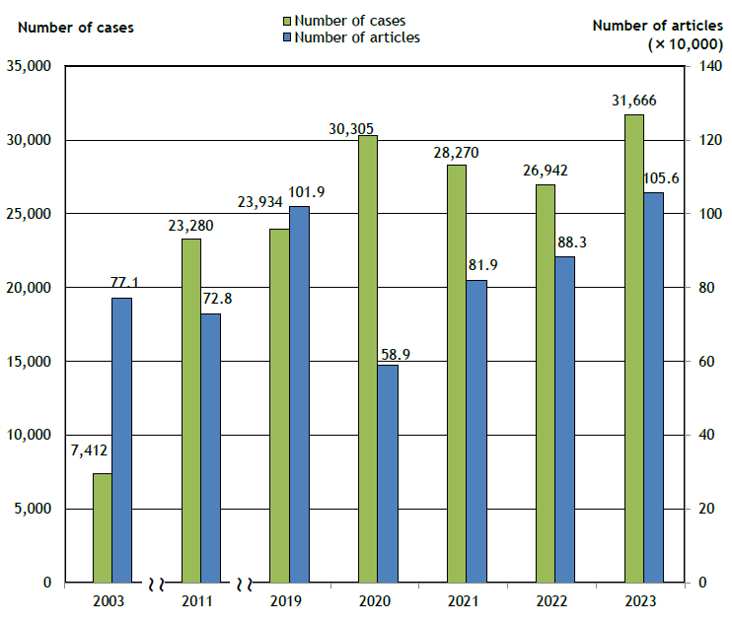
4. “2023 Seizure Statistics of IPR Border Enforcement” by Japan Customs
(1) Number of Import Seizures
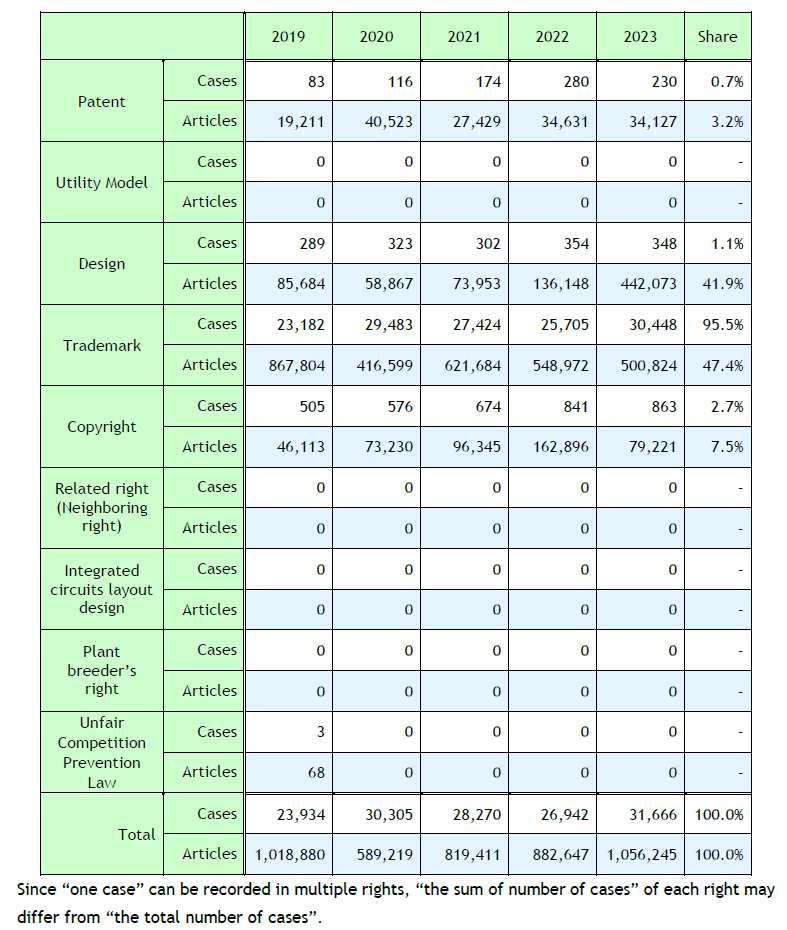
(2) Number of Import Seizures by Type of Right
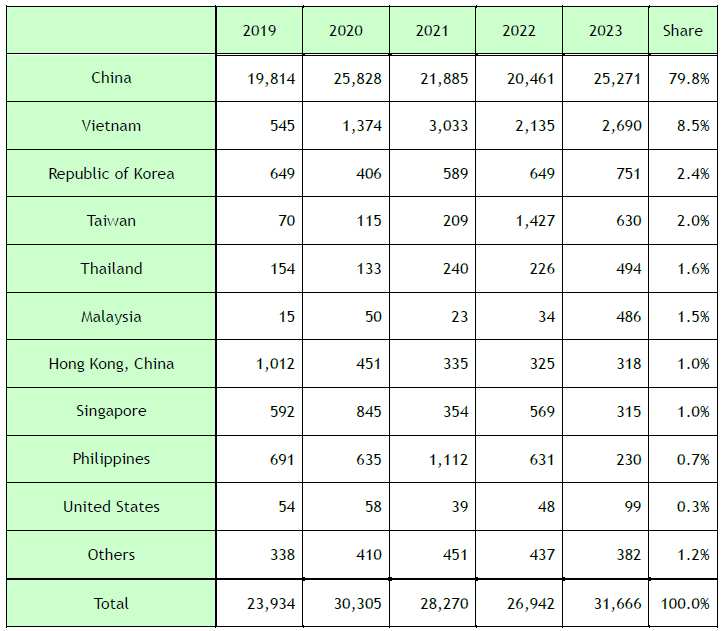
(3) Number of Import Seizures by Source Countries and Regions (cases)
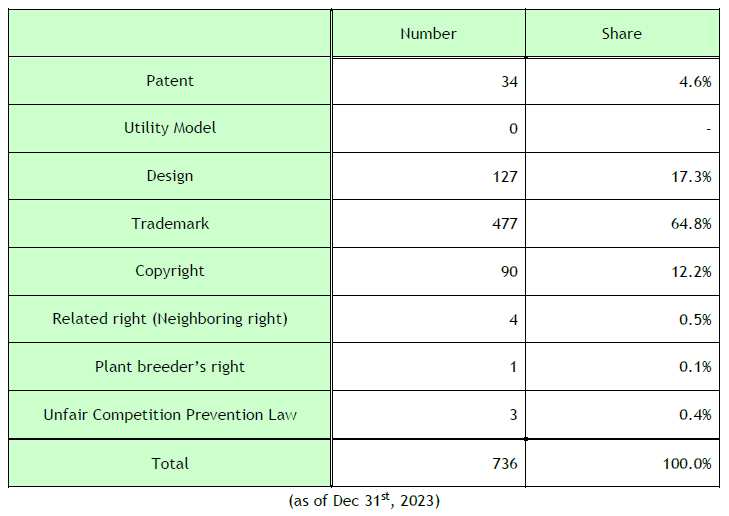
(4) Number of Valid Applications for Import Suspension
(5) Number of Export Seizures by Type of Right
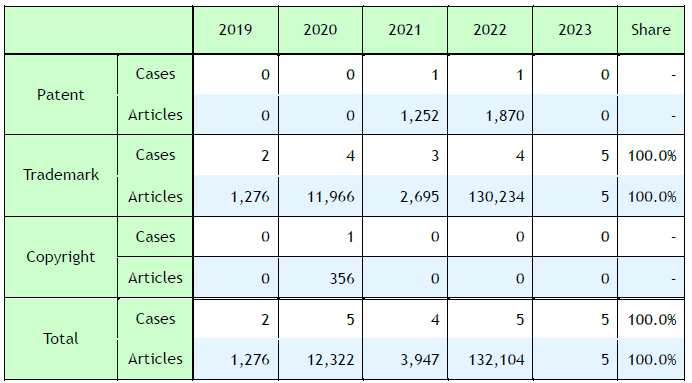
(6) Number of Valid Applications for Export Suspension
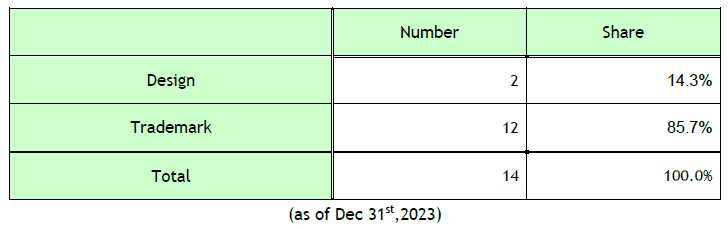
5. Attorney’s Fee
Our fee arrangement for IPR border enforcement before Customs will usually be on an hourly time charge basis. The rate is usually ¥55,000-¥60,000 per hour for a senior partner, ¥50,000-¥55,000 per hour for a partner, ¥45,000-¥50,000 per hour for a senior associate, and ¥35,000-¥45,000 per hour for a junior associate.